How to create an investor-ready pitch deck
 Baltej Singh6 min read
How to create an investor-ready pitch deck means building a leave-behind that tells a coherent story without requiring you in the room. Geoff Ralston's Y Combinator guide to seed fundraising describes the deck as a framework for your narrative, not a wall of text. Graphics, charts, and screenshots beat dense paragraphs.
This post follows that structure and pairs it with SEC capital-raising education for founders who need to know which offering path they are on. It is not legal advice.
What investor-ready means
Investor-ready is specific: a stranger can explain your company after one pass. The problem is sharp. The customer is named. The product is visible. Traction is numeric. The ask is clear. Claims you cannot source are gone.
Warm introductions still beat cold decks, as the YC seed guide notes. The deck does not replace trust. It prevents avoidable confusion once trust starts.
Documents to prepare beside the deck
The same guide recommends a short executive summary (one page is better than two) covering vision, product, team, traction, market size, and minimum financials, plus what you raised before and what you are raising now. Do not invent elaborate diligence packs for a seed conversation; overbuilt diligence requests are a yellow flag.
Slide-by-slide outline
Use this order unless you have a strong reason to change it. It matches the YC leave-behind pattern:
- Company, logo, tag line
- Vision: why the company exists
- Problem: customer pain
- Customer: who they are and how you reach them
- Solution: what you built and why now
- Market: total available market with evidence, not theater
- Competitive field: competition and any insight others miss
- Traction: key stats and acquisition plans
- Business model: how users become revenue
- Team: who you are and why you can win
- Summary: three to five takeaways
- Fundraising: raised to date, raise now, optional near-term roadmap
How to write each section without fluff
Problem and customer
Name a person and a costly job. Avoid abstract "inefficiency in the market." Show the workaround they use today.
Solution
Demo beats adjectives. Screenshots or a short product clip help. Explain why this year is different.
Traction
Prefer rates and cohorts over vanity totals. The YC guide notes that rapid adoption helps persuade; inventing growth does the opposite.
Market
Large markets need a credible path, not a slide that multiplies every human on earth. Cite the basis for TAM figures.
Team
Roles, relevant scars, and why this group ships. Photos are fine. Skip filler biographies.
Ask
State the amount range and what months of plan it buys. The seed guide's engineer-cost rule of thumb is one way to explain a 12 to 18 month horizon; adapt to your mix and say so.
Financing context that should not live only on slides
Know whether you are discussing a safe, convertible note, or equity round. YC's guide summarizes safes as simple agreements for future equity without interest or maturity, and notes equity rounds are more complex and usually need counsel. SEC education pages outline registered vs exempt paths at a high level. Put the instrument in the ask conversation; keep the deck readable.
Process tips from the seed guide
- Aim for the next meeting, not a same-day close.
- Practice until the story is natural; pitching is a skill.
- Listen more than you speak when the investor engages.
- Leave with clear next steps; do not accept ambiguity.
- Once someone says yes, close quickly with standard documents.
Light product note
If you already store traction, team, and company facts in one workspace, export them into the deck instead of rewriting from memory. Nautis users sometimes pull company context from Chief of Staff memory and brand kit fields; the deck structure above stays the same either way. See What does a startup chief of staff do? for role context, not as a substitute for fundraising counsel. For capital-raising educational paths, keep the SEC capital raising hub open while you choose an instrument.
How to create an investor-ready pitch deck that survives a forward
Assume the partner who was not in the room will read it alone. Remove insider jargon. Define acronyms once.
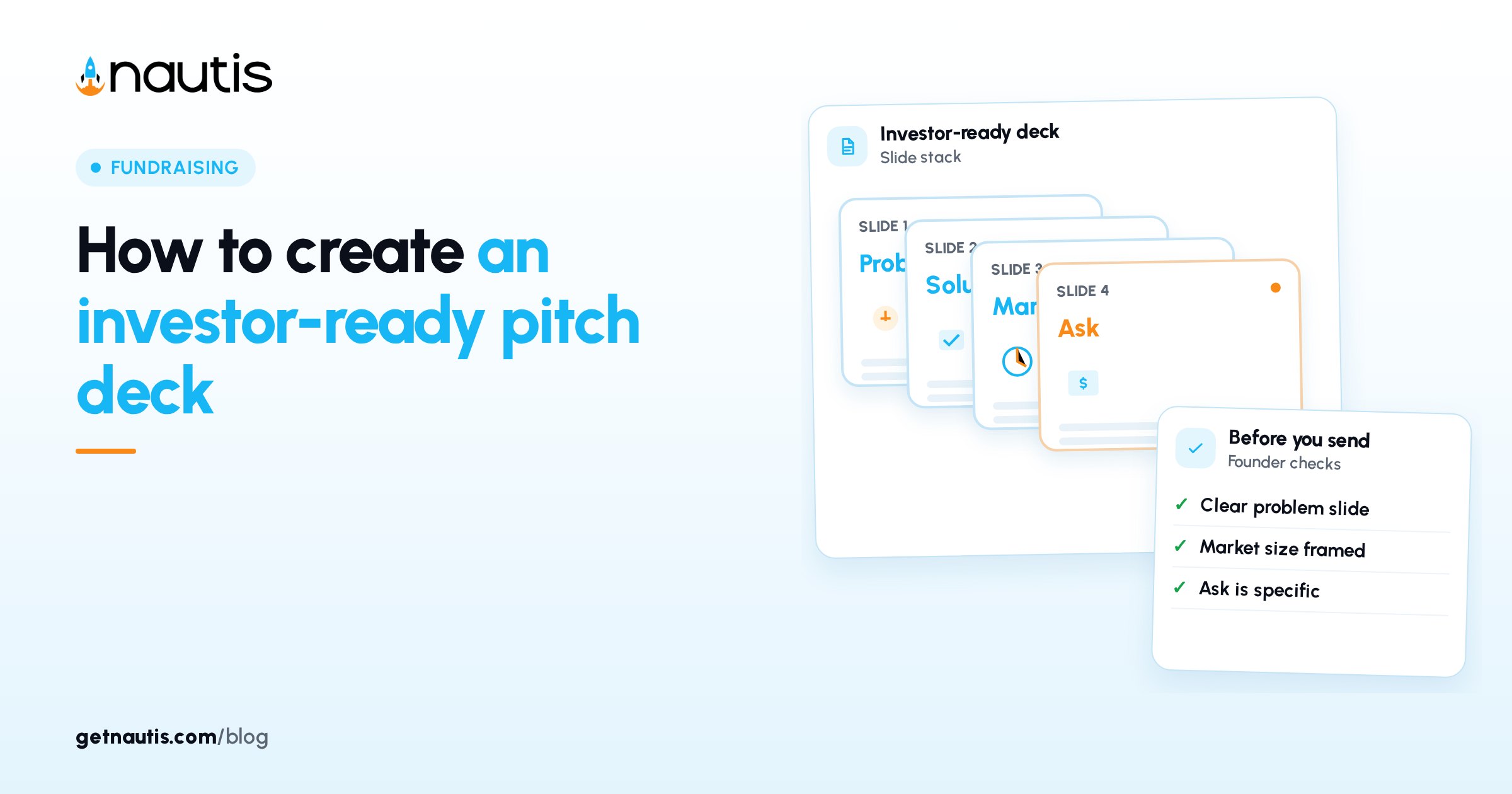
Checklist before you send
- One idea per slide
- Numbers have dates and sources
- Competition slide is fair
- Ask matches the verbal raise
- File name and link permissions work on mobile
- You can present it in under ten minutes without reading bullets
Create an investor-ready pitch deck by editing for clarity until a tired founder can narrate it cold. Then go get the meetings.
How to rehearse an investor-ready pitch deck
Time yourself. Cut any slide you skip aloud. Record a pass on your phone and watch without sound: the visuals should still carry sequence. Then watch with sound and remove filler words.
Bring a demo environment that cannot leak real customer data. If the product is not ready to click, use a short scripted video rather than a live flaky build.
Follow-ups after the meeting
Send the deck PDF the same day with a three-line note: thanks, the ask, and the next step you heard. Log the investor, date, interest level, and promised follow-up in your fundraising tracker. The YC seed guide stresses closing quickly once you hear yes and staying organized while you still have other conversations open.
Common deck failures
- Market slides with no method
- Team slides that ignore missing skills
- Traction slides that restart the y-axis
- Ask slides that omit use of proceeds
- Appendix dumps that belong in a data room later
Internal links for operators who also run the company day
Fundraising does not pause operations. Keep a daily founder briefing so the raise does not erase blockers and cash. See Chief of Staff if you use Nautis, or mirror the same sections in a single doc. For how the CoS role differs from personal assistance, keep the comparison honest when you write related posts later.
Final pass before Demo Day or a roadshow
Print the twelve slides. Hand them to someone outside the company for five minutes. Ask them to explain the business back. Fix whatever they invent. That is the investor-ready pitch deck test.
Frequently asked questions
How many slides should a seed deck have?
The YC seed fundraising guide outlines a coherent leave-behind with about a dozen common parts. Prefer clarity over a fixed magic number, and cut slides you skip when rehearsing.
Do I need a full diligence room before first meetings?
No. For seed, an executive summary and a clear deck are enough to start. Overbuilt diligence requests early can be a warning sign.
What belongs on the ask slide?
Amount or range, what months of plan it funds, and optionally a short roadmap. Match the verbal raise and name the instrument in conversation.
Sources
- YC guide to seed fundraising. Checked on October 31, 2026.
- SEC capital raising education. Checked on October 31, 2026.
Baltej Singh is a serial entrepreneur, technology leader, and Founder & CEO of Nautis and DemoVexa, with over 16 years of experience building software products, SaaS platforms, and startups. Previously the Co-Founder & CTO of SanchiConnect, he has worked extensively in the DeepTech startup ecosystem, connecting with 200+ venture capital firms and supporting a network of 4,000+ startups. Passionate about AI, automation, and entrepreneurship, he focuses on building innovative products that solve real-world problems and help businesses grow.