How to use AI ops before your first hire
 Baltej Singh8 min read
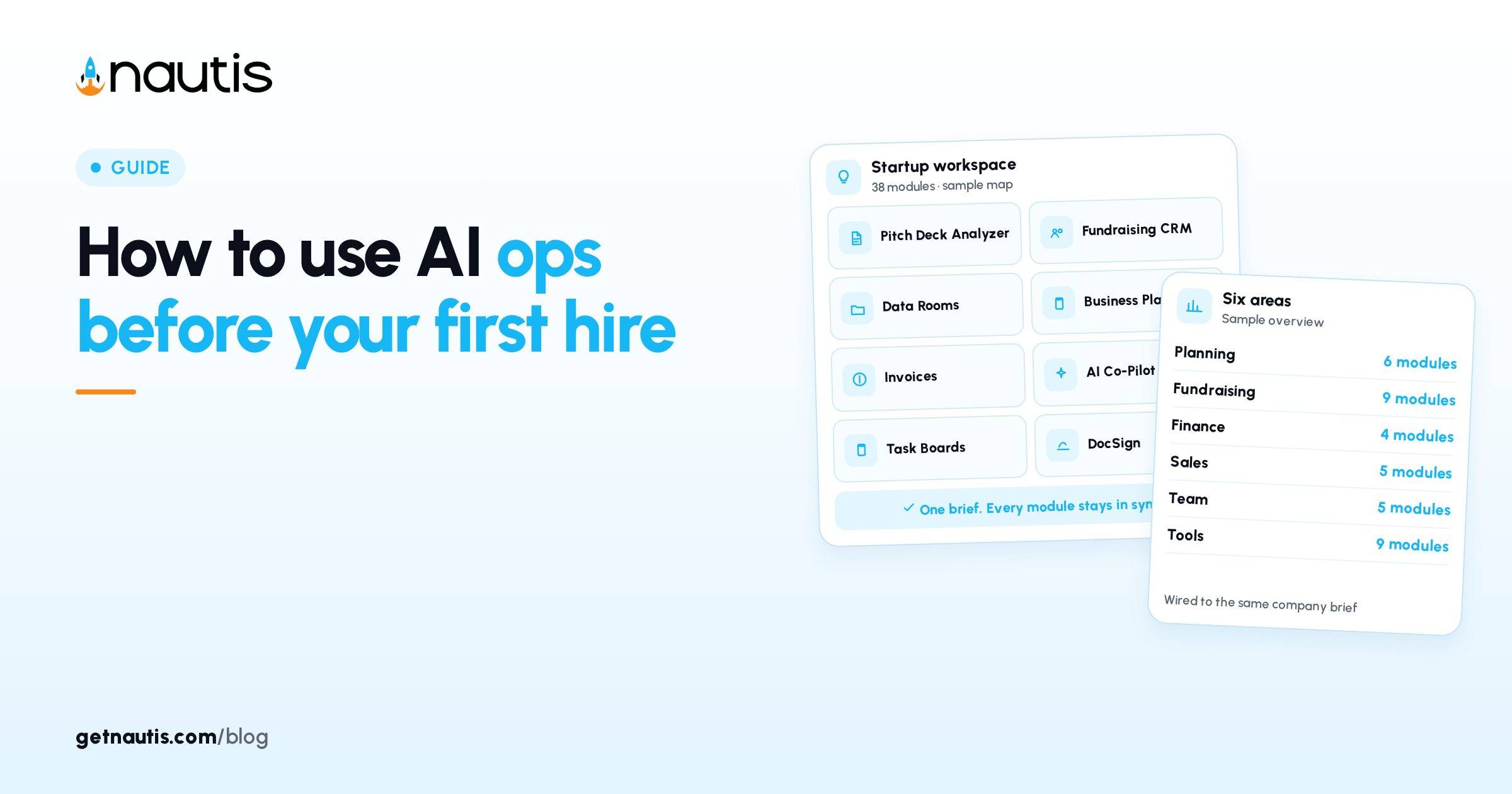
AI ops before first hire means you buy back founder hours with standing jobs and gated writes before you open a req. It is not a substitute for payroll, management, or a seat that needs human judgment all day. Use it to keep briefs, follow-ups, and expense capture moving while you prove the role. Operating guidance only, not employment or legal advice.
AI ops before first hire starts with an hour budget
List a normal week in hours, not vibes. Separate deep work (product, customers, fundraising) from ops glue (inbox triage, status notes, receipt logging, meeting prep).
Bucket | Illustrative solo week (hours) | Keep human | Candidate for AI ops | Hire-later signal |
|---|---|---|---|---|
Customer and product | 20 | Calls, decisions, build | Prep notes, CRM tidy drafts | Same work still spills into nights after AI ops is stable |
Fundraising or partnerships | 8 | Live conversations | Brief packs, follow-up drafts on ask-first | Dedicated coordinator becomes the bottleneck |
Admin and money hygiene | 6 | Bank and payroll choices | Expense capture, recurring reminders | Missed closes or messy books persist |
Coordination | 6 | Hard tradeoffs | Standing digests, meeting prep nudges | Calendar and task debt keep growing |
Illustrative solo week (composite only): 40 hours on paper, 55 in reality. AI ops before first hire aims to return the stolen 10-15 ops hours, not to invent a fake 20-hour week.
Write the budget in a Note dated this Monday. Without it, every new routine looks free. Protect deep-work blocks on the calendar before you add routines. If AI ops only fills gaps with more summaries you never read, you did not buy hours back. You bought guilt.
Illustrative math (composite only): cutting two hours of receipt chasing and one hour of meeting-prep scramble is worth more than a flashy custom that drafts strategy memos nobody asked for.
Triage each job: keep, automate, or hire later
Score jobs on blast radius, judgment, and repeatability. High judgment or irreversible external risk stays human or ask-first. High repeatability with a clear artifact can become a catalog routine. Persistent load that still needs a person after automation is a hire-later signal, not another vague custom job.
Keep human for now
Pricing calls, final candidate decisions, investor negotiations, and anything that changes money language without a template. AI can draft; you still own the send.
Automate with a stop rule
Meeting prep digests, read-only research summaries, expense receipt prompts, and recurring internal status Notes. Prefer catalog Routines from Suggested for you or Explore. Built-in routines you have not touched may appear paused or ready depending on workspace defaults; only schedule what you will read. Each card shows schedule or Triggered, a Read-only label when it changes nothing, and estimated cost. Only Owners and Admins can add, edit, run, pause, resume, or remove a routine. Plans cap how many you can keep.
Hire later
Work that needs same-day human ownership across many people or that keeps failing because no one is accountable between 9 and 6. Automating a missing owner usually creates Approvals noise. Park the seat name and the hour math on the budget Note instead of forcing a custom routine to act like a teammate. Write the hire-later seat as a one-line job story: outcomes, hours per week, and what already failed under automation. That line becomes the seed of a real req later. Skipping it turns every busy week into a vague "we need someone" complaint.
Install a thin stack in fourteen days
Day 1-2: finish the hour budget and triage list. Day 3-5: add at most two catalog routines that return summaries you will actually read. Prefer Read-only cards first. Day 6-8: route expense capture into Expenses so receipts leave the camera roll. Use Add Expense or Scan a Bill; set Payment Method honestly. Day 9-11: keep external sends on ask-first. Clear Approvals the same day. Day 12-14: review AI Activity for surprise actions; pause anything noisy; refuse new customs until the two catalog jobs are boring.
This is a capacity install, not a 30-day partnership calendar and not a full autonomy redesign. Widen Agent Autonomy only in a separate review after the thin stack is quiet. Credits and plan caps still apply. Paused routines count toward the routine limit, so remove what you will not run. Try it once on a catalog card before you commit a schedule if you need a smoke test; writes still follow approval rules.
Illustrative install (composite only): a founder enables a weekday briefing routine and a Friday digests routine, scans receipts into Expenses daily, and leaves customer email on ask-first. By day 14 the stolen evening admin block shrinks from two hours to thirty minutes.
What good AI ops looks like before a headcount ask
You can point to:
- A written hour budget with before/after estimates.
- Two or three standing jobs with owners, artifacts, and stop rules.
- Approvals cleared same day for two quiet weeks.
- No surprise external messages in AI Activity.
- A named seat you still refuse to open, with the reason tied to hours that automation did not absorb.
If you cannot show that packet, you are asking for a hire to fix process debt AI ops never attempted. Boards and co-founders should see the packet before the job post. If you raise while still solo on ops, put the same packet in the data room narrative: what is automated, what stays founder-owned, and which seat is next. Investors can tell the difference between real capacity and theater.
For the Chief of Staff overview, see What is an AI chief of staff. For email sends that must wait on you, see AI that asks before acting. For cash pressure that often triggers early hiring panic, see How to calculate startup burn rate and runway.
Failure modes that fake progress
- Standing up five customs in week one and calling it AI ops before first hire.
- Measuring success by routine count instead of returned hours.
- Clearing Approvals without reading.
- Using AI digests as a reason to skip customer calls.
- Opening a req because chat felt busy, while the hour budget was never written.
AI ops before first hire fails open when every sticky problem becomes a new agent. It fails closed when you refuse any standing job and burn out, then hire in a panic. Aim for the thin stack and a dated review. Teach co-founders the same triage words: keep, automate, hire later. Shared vocabulary stops one founder from hiring a generalist while the other quietly adds three customs the same week.
When to stop delaying the hire
Stop delaying when the triage column stays "hire later" for the same seat across two monthly reviews, the thin stack is already quiet, and customer or compliance work is waiting on a human who does not exist. At that point, write the scorecard for the seat and run a real search. Do not add a sixth routine to postpone the decision.
Illustrative month at Cedar Pilot
Illustrative Cedar Pilot (composite only): two technical founders, no ops hire, rising inbound.
Week 1: hour budget shows 12 hours of glue work. Triage marks receipt logging and meeting prep as automate; pricing calls stay human; a hypothetical ops coordinator stays hire-later. Week 2: two catalog routines live; Expenses scans replace weekend receipt sorting. Week 3: Approvals stay clean; one Triggered meeting prep job added; still no customs. Week 4: returned hours measured at about eight per week. Hire-later seat remains closed because product still needs both founders full-time. They schedule a 60-day recheck with the same budget table. At the recheck they compare actual calendar hours to the week-1 estimate. Where AI ops returned less than promised, they either fix the routine inputs or move the job to hire-later. They do not celebrate unused digests.
Partnership language stayed out of the hiring debate. The debate was hours, artifacts, and whether a human seat still unpaid for itself.
Revisit the budget when the company changes
Re-run the table when you close a round, launch a paid plan, or add a marketplace channel. New volume often moves a job from automate to hire-later overnight. Update Suggested for you picks when your stage changes, and remove routines you no longer read so plan caps stay free for useful jobs.
AI ops before first hire ends the day you can fund and manage a person for the seat. Until then, the product of the practice is returned deep-work hours with an audit trail, not a cartoon company that runs itself.
When the first hire finally arrives, hand them the hour budget, the triage list, and the routine inventory on day one. Their job is not to reinvent standing orders in chat. It is to own the hire-later work you already named and to keep Approvals and Expenses hygiene while you return to customer and product blocks.
If the hire is an ops generalist, give them edit rights only after they have read a week of run summaries. If the hire is commercial or technical, keep Owners and Admins as the only people who can add routines until trust is proven. AI ops before first hire should make onboarding clearer, not hand a new person a pile of silent automations.
Frequently asked questions
What does AI ops before first hire mean in Nautis?
Using catalog Routines, Approvals, and Expenses hygiene to return founder hours before you hire an ops seat.
Who can add routines?
Only organization Owners and Admins can add, edit, run, pause, resume, or remove routines. Plans cap how many you can keep.
Should I widen Autonomy during the thin stack?
No. Keep external sends on ask-first until the stack is quiet, then review Autonomy separately.
When is a hire still required?
When the same seat stays hire-later across reviews, the thin stack is already quiet, and human-owned work is waiting.
Sources
- Nautis Routines help. Checked on October 31, 2026.
- Nautis Expenses help. Checked on October 31, 2026.
- What is an AI chief of staff. Checked on October 31, 2026.
Baltej Singh is a serial entrepreneur, technology leader, and Founder & CEO of Nautis and DemoVexa, with over 16 years of experience building software products, SaaS platforms, and startups. Previously the Co-Founder & CTO of SanchiConnect, he has worked extensively in the DeepTech startup ecosystem, connecting with 200+ venture capital firms and supporting a network of 4,000+ startups. Passionate about AI, automation, and entrepreneurship, he focuses on building innovative products that solve real-world problems and help businesses grow.