How to ask for a warm intro to investors
 Baltej Singh8 min read
A warm intro to investors is a short, forwardable ask that makes your connector look careful, not desperate. You name one target, paste a blurb they can send without rewriting, and give them an easy out. Cold lists burn weeks. Warm paths that respect the connector close meetings.
This is general fundraising education grounded in public advice from Paul Graham and Y Combinator seed materials as of October 2026, plus product help for logging the pipeline. It is not legal advice and not a promise that any named investor will meet you.
What a warm intro to investors actually is
A warm intro is a trusted person asking an investor to take a first look because they vouch for the fit, not because they owe you a favor. The investor trusts the connector more than they trust your cold email. Your job is to make that trust cheap to spend: one clear ask, one blurb, one next step.
If the connector has to invent who you are, rewrite your traction, or guess the check size, the intro dies in drafts. Write the forwardable note yourself. Ask them only to send it or say no.
Why warm beats cold for early meetings
Paul Graham's fundraising map puts introductions before most serious conversations in the phase where startups raise from angels and seed funds. Y Combinator's seed fundraising guide makes the same point: besides a demo day, a warm introduction is the usual strong path to a venture capitalist or an angel. Cold outreach can fill gaps after the graph is exhausted. It should not be plan A while people who already trust you sit unused.
Warm does not mean vague. "Anyone who invests in SaaS" is a cold ask wearing a friendly jacket. Name the firm or angel, why they fit stage and thesis, and what you want the meeting to decide.
Build the intro map before you ask anyone
Inventory beats inspiration. For each target investor capture:
- Why they fit stage, sector, and check size
- Who in your graph knows them (and how well)
- What you will ask that person to send
- Status: not asked, asked, sent, meeting booked, passed
Cap the active list so you can follow up. Twenty named paths with owners beats two hundred scraped logos.
Ask quality | What the connector receives | Typical investor reaction |
|---|---|---|
Vague | "Meet my friend who is fundraising" | Soft ignore |
Semi-warm | Deck dump, no ask line | Skim and stall |
Forwardable | Short blurb, one ask, easy decline | Yes, no, or timed maybe |
Over-engineered | Long biography of the connector | Embarrassment; delayed send |
Aim for the forwardable row every time.
How to ask for a warm intro to investors without awkwardness
Ask in writing so the connector can forward without a phone call. Keep your ask under a few sentences:
- Context in one line (who you are to them)
- The named investor and why that person is a fit
- The blurb to paste
- Permission to say no with zero guilt
Never guilt-trip. Never stack five targets in one email. One target per ask keeps the social cost honest. If they decline, thank them and move to the next path the same day.
When they agree, do not hover. One polite nudge after a few business days is enough. A second nudge usually costs more reputation than it buys a send.
Write a blurb the connector can paste
The blurb is the product. Write it so the investor can decide in thirty seconds whether to take a first call.
Include:
- What you build in one plain sentence
- Who pays or who uses it, with one proof point
- Amount, instrument, and decision window in one line
- A single ask: fifteen-minute call or reply with a pass
Leave out mission essays, competitor takedowns, and adjectives that are not tied to a number. Assume the note will be forwarded again. Keep secrets out of the first blurb; put them in the data room after interest is real.
After the intro lands
Treat a warm intro like the start of a process, not a win. Reply fast. Propose two concrete times. Bring the same ask line you put in the blurb so the story does not fork.
Log the next step the same day: another meeting, a written update, a pass, or a soft commit with a date. Applause without a date is not progress. If the investor goes quiet, move attention to higher expected-value paths instead of writing novels into the void.
When someone commits, ask whether they will introduce you to two more investors they respect. That pattern compounds. Do not ask people who said no for intros; that can read as an anti-recommendation.
Mistakes that burn connectors
- Sending a different amount or instrument than the blurb promised
- Asking the same person for five intros in one week
- Surprising the connector with a live pitch request on their calendar
- Pasting the full deck into the first intro email
- Publicly thanking them in a way that exposes a private relationship
- Letting CRM notes sit for a week so follow-ups contradict memory
- Turning a soft maybe into pressure on the connector to "nudge" daily
If two of those show up together, pause new intro requests for forty-eight hours and fix the operating system of the raise.
Where Nautis holds the map without claiming the relationship
Nautis does not replace warm introductions. It keeps the shortlist and pipeline honest while you do the human asks.
Find Investors is a searchable directory of venture firms, angels, and other backers. Filter by type, stage, ticket size, industries, and geography, open a profile, and add a fit into your fundraising pipeline when the Investors module is enabled.
Fundraising CRM keeps each investor as a deal inside a named round with stages, notes, meetings, and next steps so amount and instrument do not fork across inboxes.
Create the round first (Seed, bridge, or whatever label you use), then add each target as a deal so default stages such as Lead, Contacted, Meeting, Term Sheet, Committed, and Passed stay consistent. On the deal note for an intro ask, log the connector's name, the date you requested the forward, whether the blurb was sent unchanged, and the next step with a date. That record is what stops a second cofounder from asking a different friend for the same intro a week later.
Investor Readiness scores whether the pack and pipeline look ready for the round you claim to be raising, then ranks gaps. Use it before you widen intro volume, not after fifty empty forwards.
Two intro scenes (examples)
Forwardable week
Priya listed twelve seed investors her advisors already knew for B2B workflow tools. She sent one target per ask with the same blurb. Eight intros went out in ten days. Five first calls booked. Two investors asked for the data room the same week because every note matched.
Favor pile
Omar messaged twenty acquaintances with "anyone who invests?" and attached a twenty-slide deck. Three people forwarded a rewritten pitch that changed the raise size. Investors replied to conflicting stories. He rebuilt a fifteen-name map, rewrote one blurb, and restarted with one ask at a time. Meetings resumed within a week.
Neither scene is a guarantee. They show why connector care beats volume.
Cold outreach after the warm graph is thin
When warm paths are exhausted, cold notes can fill gaps. Keep them short, factual, and easy to decline. One paragraph of what you build, one proof point, one ask line, one clear next step. Do not paste the whole deck into the first note.
Research thesis fit before you hit send. A blind blast that ignores stage and sector trains investors to ignore your domain. Prefer partners over associates when you can tell the difference from public materials; associate cold email is rarely how seed deals begin.
What to put in the connector's hands besides the blurb
Offer a one-page summary only if they ask. Default to the blurb alone. Extra files raise the social cost of the forward. If the investor wants a deck after the first reply, send it yourself so the connector is not stuck in the middle of diligence.
Keep the connector copied until the investor replies once. After that, move the thread off their inbox unless they want to stay involved. Protecting their attention is part of earning the next intro.
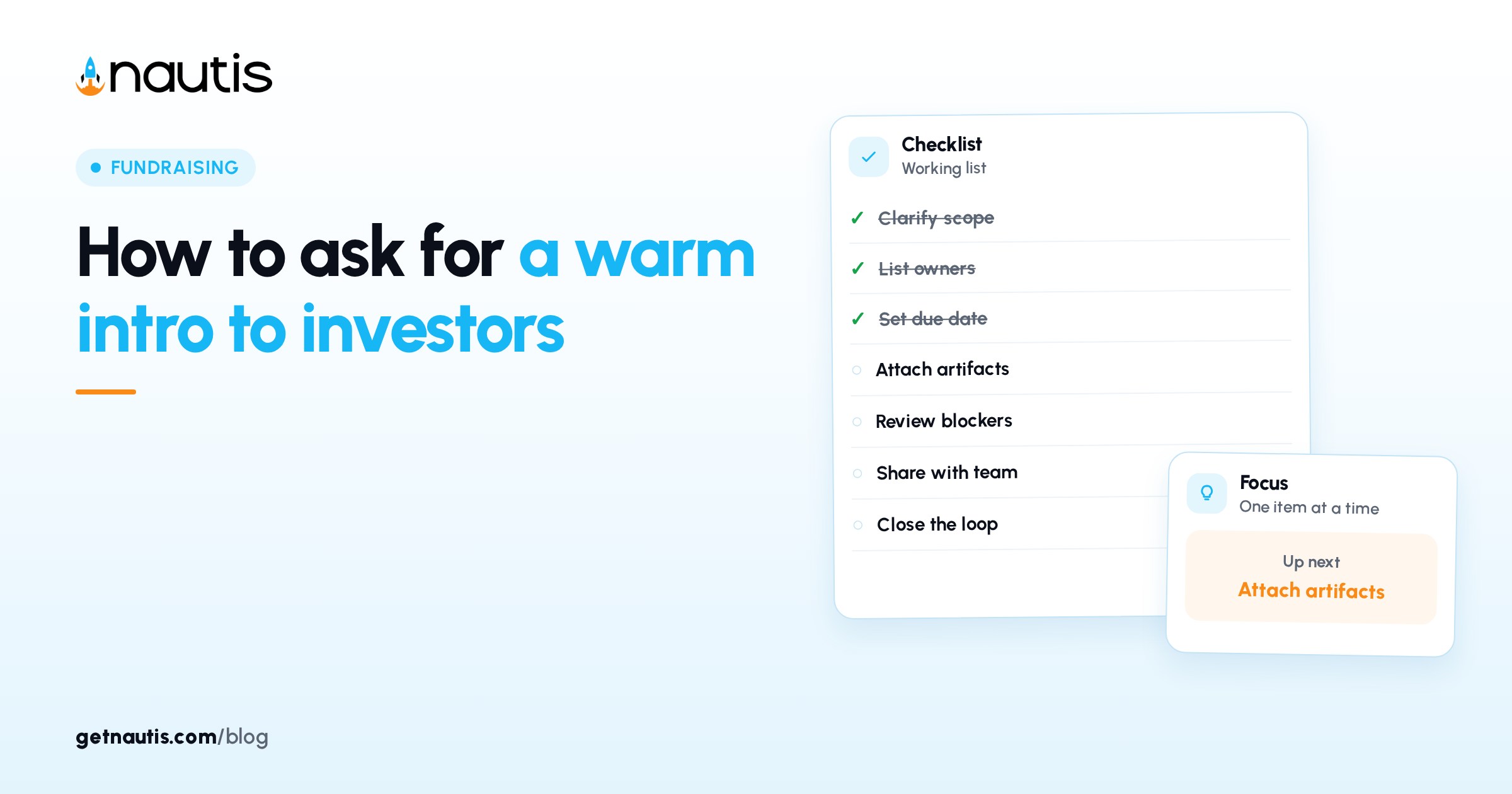
Same-week checklist for warm intros
- Lock amount, instrument, and decision window in one shared line
- Build a shortlist with warm path and owner for each name
- Write one forwardable blurb and get co-founder sign-off
- Ask for one intro at a time with an easy out
- Log sends, replies, and next steps the same day in the CRM
- Book first calls within forty-eight hours of a yes
- Ask committed investors for two more intros they respect
- Stop expanding the list until open asks are cleared
A warm intro to investors earns another meeting when the connector looks sharp and the blurb matches the call. Keep the graph clean, the ask identical, and the follow-up human.
If two connectors name the same investor, pick the stronger relationship and tell the other you already have a path. Competing intros into one inbox look chaotic. Do not batch five asks to the same person in one day; one target per ask keeps the social cost honest.
Frequently asked questions
How do I ask for a warm intro to investors?
Write a short ask that names one target, paste a forwardable blurb, and give the connector permission to say no. Send one request at a time so the social cost stays honest.
What should go in a forwardable intro blurb?
One sentence on what you build, one proof point, the amount and instrument with a decision window, and a single ask for a short call or a clear pass. Skip mission essays and deck dumps in the first note.
Should I use cold email instead of warm intros?
Warm paths come first while people who already trust you can open doors. Cold notes can fill gaps after that graph is thin, but keep them short, researched, and easy to decline.
How do I avoid burning my connectors?
Do not change the raise story after they hit send, do not stack five targets in one email, and move the thread off their inbox after the investor replies once. Thank declines and move on the same day.
Sources
- Paul Graham: How to Raise Money. Checked on October 31, 2026.
- YC: A Guide to Seed Fundraising. Checked on October 31, 2026.
- Nautis Fundraising CRM help. Checked on October 31, 2026.
Baltej Singh is a serial entrepreneur, technology leader, and Founder & CEO of Nautis and DemoVexa, with over 16 years of experience building software products, SaaS platforms, and startups. Previously the Co-Founder & CTO of SanchiConnect, he has worked extensively in the DeepTech startup ecosystem, connecting with 200+ venture capital firms and supporting a network of 4,000+ startups. Passionate about AI, automation, and entrepreneurship, he focuses on building innovative products that solve real-world problems and help businesses grow.