How to run a fair performance review for a small team
 Baltej Singh8 min read
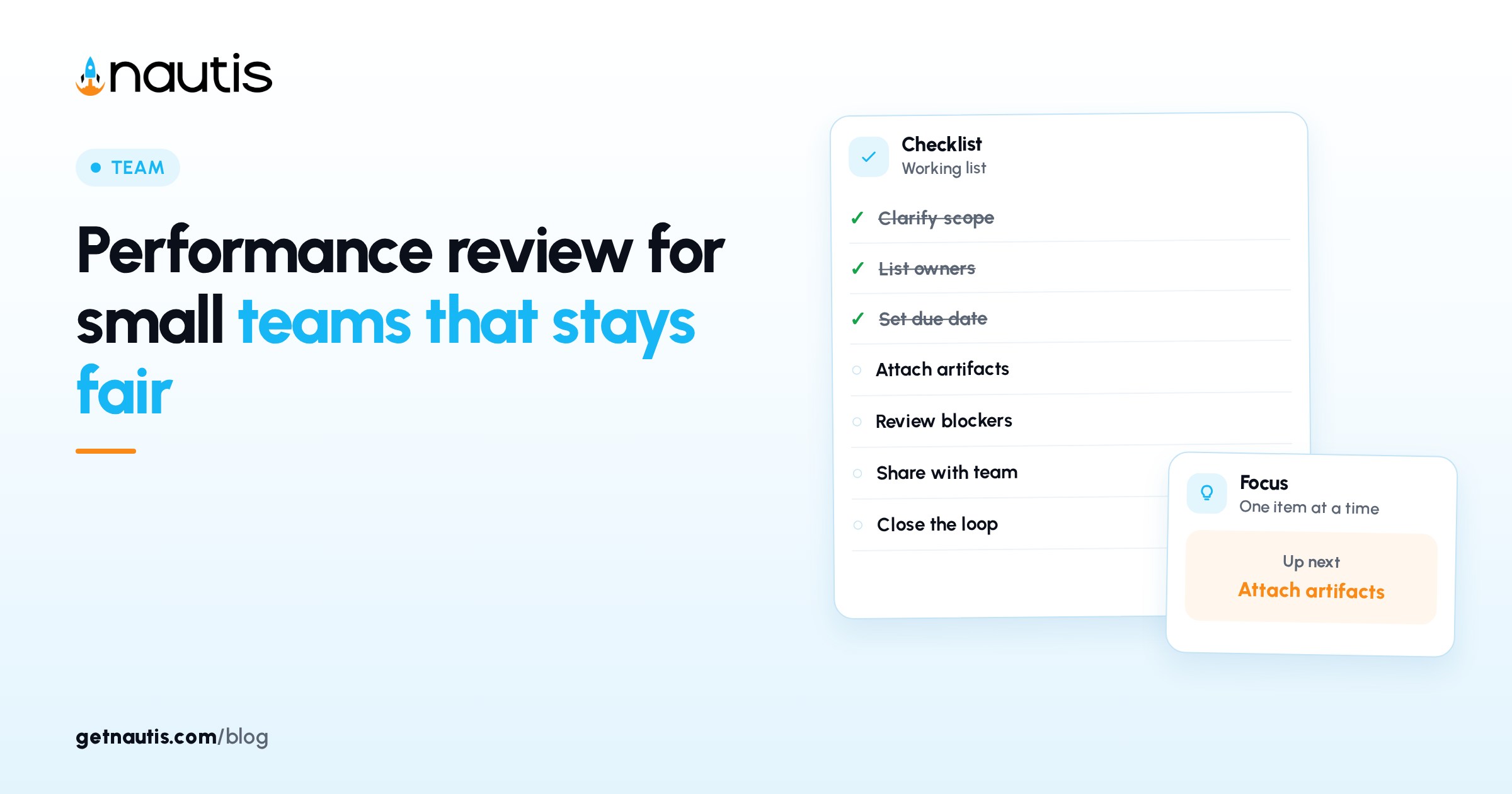
A performance review for small teams is a scheduled, written look at outcomes, behavior, and next bets for someone already on the payroll. It is not a hiring scorecard and not a surprise verdict in Slack. On a five-person company the review has to stay light enough to finish and serious enough that pay and scope changes have a paper trail. Without that paper trail, raises become politics and exits become stories nobody can reconstruct. The review exists to make those moments boring and documented.
What a performance review for small teams should cover
The review answers three questions with shared facts: what did we ask for, what happened, and what changes next. SBA guidance on hiring and managing employees stresses clear roles, fair treatment, and records that support how you pay people. Use that spirit even when you are still founder-led.
Illustrative purpose line (composite only): "Confirm outcomes against the last quarter, name one growth focus, and decide whether compensation stays, revises, or waits."
Skip vanity ratings that nobody can defend. Prefer a short evidence pack over a twelve-box corporate form. Reuse the same evidence table every cycle so people learn how to prepare without reinventing the form. Founders sometimes skip reviews until resentment is loud. Early, boring reviews cost an hour and prevent theatrical exits later.
This post is for people already hired. For bringing someone in, start from How to hire your first employee and your Jobs flow, not from this review ritual.
Agree outcomes before the quarter, not in the room
A fair review starts the day after the last one. Write three to five outcomes with finish lines the employee helped shape. Store them where both of you look weekly, such as a Task Board list or a shared note linked from their profile. Review those outcomes in ordinary 1:1s so the formal review is a summary, not the first time hard news appears. Surprises belong in product launches, not in performance rooms.
Illustrative outcomes (composite only): "Cut first-response time under four hours"; "Ship two self-serve help articles customers used"; "Own Friday metrics note without founder rewrite."
Designation and Reporting manager in Employee Management should match the scope you will judge. If the title says Product Manager and the work is pure support triage, fix the record before review day so you are not grading a fiction. Update Department and Designation when scope drifts. The Completion strip on Add employee or Edit exists so required profile fields stay complete; a half-empty profile often signals a half-defined seat.
Employment type (Full time, Part-time, Contractor, Intern) and Work type (Onsite, Remote, Hybrid) belong in the people record too. Contractors may need a different review frame and contract conversation; do not pretend a contractor review is identical to an employee one without counsel. Keep legal classification questions with counsel when Employment type is Contractor. A performance chat does not turn a misclassified contractor into an employee, and it does not replace whatever your agreement already requires for feedback or termination.
Bring evidence, not vibes
Both sides prepare a one-page evidence sheet before the conversation. Managers who wing it from memory reward recency and punish quiet reliability.
Dimension | What good looks like | Evidence to bring |
|---|---|---|
Outcomes | Finish lines met or slipped with early notice | Task Board done dates, links, metrics |
Judgment | Escalates early, documents decisions | Notes, Decision records, customer threads |
Collaboration | Unblocks others without drama | Peer notes, handoff quality |
Ownership | Problems end with a named next step | Examples of closed loops |
Growth | Skills moved in a way the company needed | Before/after samples of work |
Add a sixth free row only when the seat has a unique craft bar, such as on-call quality for engineering. Do not invent dimensions you will not discuss.
Illustrative prep rule (composite only): each person brings at least two artifacts per dimension or marks the dimension not applicable with a reason.
Do not weaponize private chat screenshots that were never coached in the moment. If feedback mattered, it should already have appeared in a 1:1 note earlier in the quarter. Self-assessment comes first in the room so the employee hears their own story before yours. Correct facts gently; do not ambush with a private score you never previewed.
Run a short conversation with a written close
Book sixty minutes or less. Open with outcomes, not personality. Walk the evidence table. Name strengths with examples, then gaps with examples, then the single most important change for the next period.
Illustrative agenda (composite only): ten minutes employee self-assessment; twenty minutes manager evidence; fifteen minutes joint next outcomes; ten minutes compensation or scope discussion; five minutes write the close while both are present.
Write the close in the meeting: outcomes verdict, growth focus, support the company owes, and date of the next check. Email or doc the same text the same day. Memory drifts by Friday. Let the employee add factual corrections within forty-eight hours. Opinions can differ; dates and shipped links should not.
If Burnout or load is part of the story, say so with facts (hours, coverage gaps), not moral judgment. Fix staffing or scope when the evidence says the seat is impossible. Separate misconduct from performance. Harassment, theft, or safety issues follow a different path with counsel. This ritual assumes good-faith work quality, not an investigation.
Tie pay and title changes to the people system
When the review changes pay or level, open the employee profile in Employee Management and use Compensation. Click Add revision (or Edit). Choose Revision type such as new, revision, or promotion. Enter Annual CTC and adjust Basic %, HRA %, Allowances, and Deductions as your setup requires. Save so the dated history stays readable.
Illustrative trail (composite only): review on 3 March decides a promotion; Compensation revision type promotion saved the same day; Designation updated to match.
Do not change payroll folklore in a side spreadsheet and forget the profile. Payouts and future audits follow the latest compensation revision. One-off bonuses can sit as payout adjustments without rewriting Annual CTC. Permanent raises belong in a dated revision so history stays honest. Only people with HR Management permission should see Payroll and Payouts; tighten Members & Roles if salaries must stay narrower.
If someone is leaving, set Exit date rather than deleting the record so history stays coherent. Deleting wipes the person; exited people may still count toward your employee limit.
Make remote and hybrid reviews as concrete as office ones
Work type Onsite, Remote, or Hybrid should not change the evidence bar. It changes how you collect artifacts. Remote reviews lean harder on written outcomes, recorded customer work, and Task Board history because hallway praise never existed.
Illustrative remote pack (composite only): support CSAT export, two loom walkthroughs of shipped fixes, and the Friday metrics notes they authored.
Give timezone-friendly slots and send the evidence table twenty-four hours ahead. Record the session only with clear consent and a retention rule. Many small teams skip recording and rely on the written close instead. Do not open with small talk that eats the only overlap hour. End with the written close in a shared doc both can see before cameras off.
If Hybrid staff get more informal coaching in the office, write those coaching notes down or the review will look biased against remote peers.
Keep the ritual small enough that you repeat it
Cadence for a small team is often twice a year plus a light midpoint note, not monthly theater. Cancel a cycle that slips three times and replace it with a shorter written exchange rather than pretending. Publish the company-wide review months on a single calendar everyone can see. Hidden schedules create accidental unfairness when one person is reviewed late and another early against different company conditions.
Illustrative minimum viable review (composite only): shared outcomes doc, thirty-minute call, one-page close, compensation revision only when pay changes.
Train every Reporting manager on the same evidence table. Inconsistent reviews across a tiny company feel personal even when they are only sloppy. When you are the only manager, still write the close as if a future lead will read it. Continuity matters the week you finally hire one.
Revisit outcomes when the company strategy shifts mid-cycle. A fair review rewrites the target list in daylight instead of failing people against a dead plan. If the review concludes the seat should change shape, rewrite outcomes within a week. Leaving someone in a failed shape for another full cycle is how small teams lose trust.
Put the next review dates on the calendar when you close this one. Ship the close note before you open the next fire drill. Fairness is a shared calendar habit, not a speech in all-hands. Put the dates where the whole company can see them. After the close note, add a calendar hold for the midpoint check. Midpoints are fifteen minutes and one question: are the outcomes still the right ones? The review stays fair when outcomes were knowable, evidence was shared, the close was written, and pay changes hit Compensation the same week as the decision.
Frequently asked questions
How often should a small team run performance reviews?
Many teams run a fuller review twice a year with a short midpoint check. Pick a cadence you will actually keep rather than a corporate monthly theater.
What should we bring as evidence?
Artifacts tied to agreed outcomes: Task Board completions, metrics, customer threads, and samples of work. Skip unread private chats that were never coached live.
How do raises show up in Nautis?
Open the employee profile Compensation section, Add revision, choose a Revision type such as revision or promotion, enter Annual CTC and related fields, then Save for a dated history.
Should contractors get the same review as employees?
Use Employment type honestly and confirm the right frame with counsel. Contractor agreements may require different feedback and ending rules than employee reviews.
Sources
- Nautis Employee Management help. Checked on October 31, 2026.
- Nautis Task boards help. Checked on October 31, 2026.
- SBA: Hire and manage employees. Checked on October 31, 2026.
- How to hire your first employee. Checked on October 31, 2026.
Baltej Singh is a serial entrepreneur, technology leader, and Founder & CEO of Nautis and DemoVexa, with over 16 years of experience building software products, SaaS platforms, and startups. Previously the Co-Founder & CTO of SanchiConnect, he has worked extensively in the DeepTech startup ecosystem, connecting with 200+ venture capital firms and supporting a network of 4,000+ startups. Passionate about AI, automation, and entrepreneurship, he focuses on building innovative products that solve real-world problems and help businesses grow.