A startup hiring process that still works at 20 people
 Baltej Singh8 min read
A startup hiring process that scales is the set of repeatable gates you run the same way for hire two through hire twenty: a written scorecard, a named owner, fixed interview stages, a yes-or-no decision rule, and a clean handoff into the people record. The first seat still needs role proof, worker classification, and payroll setup; for that path see How to hire your first employee at a startup. This post assumes you will hire more than once and need a process that does not reinvent itself every week. EEOC guidance on prohibited employment policies and practices is a reminder that selection procedures must stay lawful and consistent. This is orientation for founders, not legal advice. Confirm offers, classification, and local rules with counsel.
Why a startup hiring process has to outlast the first yes
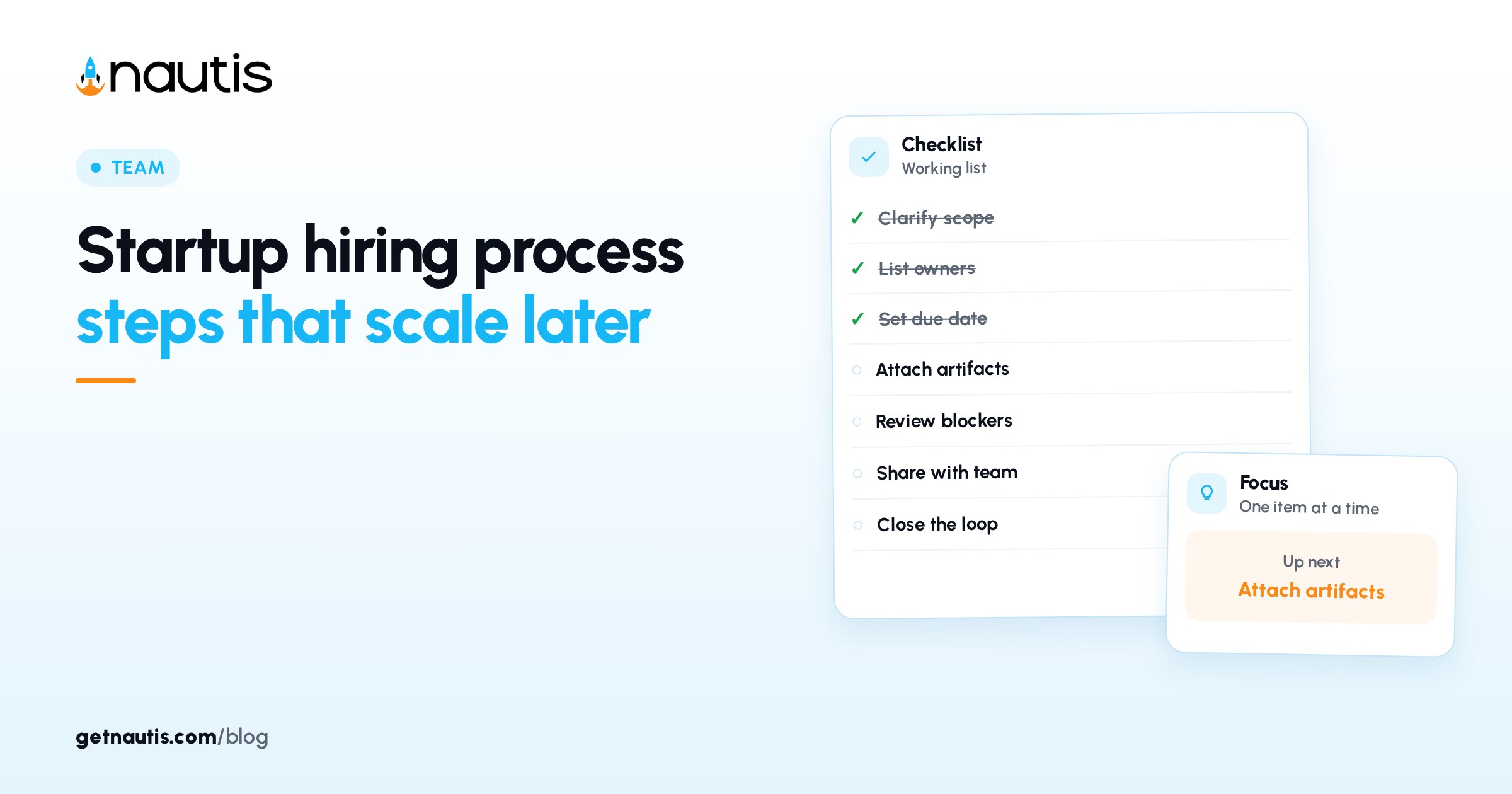
Write the process on one page before you publish the next role:
- Scorecard with must-have outcomes for the first ninety days
- Owner who moves candidates and schedules rounds
- Stage list that matches how you actually decide
- Debrief template with a clear hire / no-hire call
- Offer packet checklist and start-date owner
- Day-one task list so the hire is not idle
Illustrative one-pager title (composite only): "Hiring process v3 - engineering and GTM share stages; scorecards differ by role."
If two founders run different loops for similar roles, candidates feel the chaos and your bar drifts. A startup hiring process only scales when the page beats memory.
Store the one-pager next to the Jobs dashboard link so owners do not hunt Slack. When the process changes, bump the version in the title and tell every interviewer the same day.
Build the scorecard before the careers page goes live
A scorecard lists the outcomes the person must produce, the skills you will test, and what is nice-to-have. YC's hiring library pieces, including guidance on hiring early engineers and on avoiding common hiring mistakes, stress finding people who fit the work ahead and running a disciplined loop, not collecting impressive resumes for their own sake.
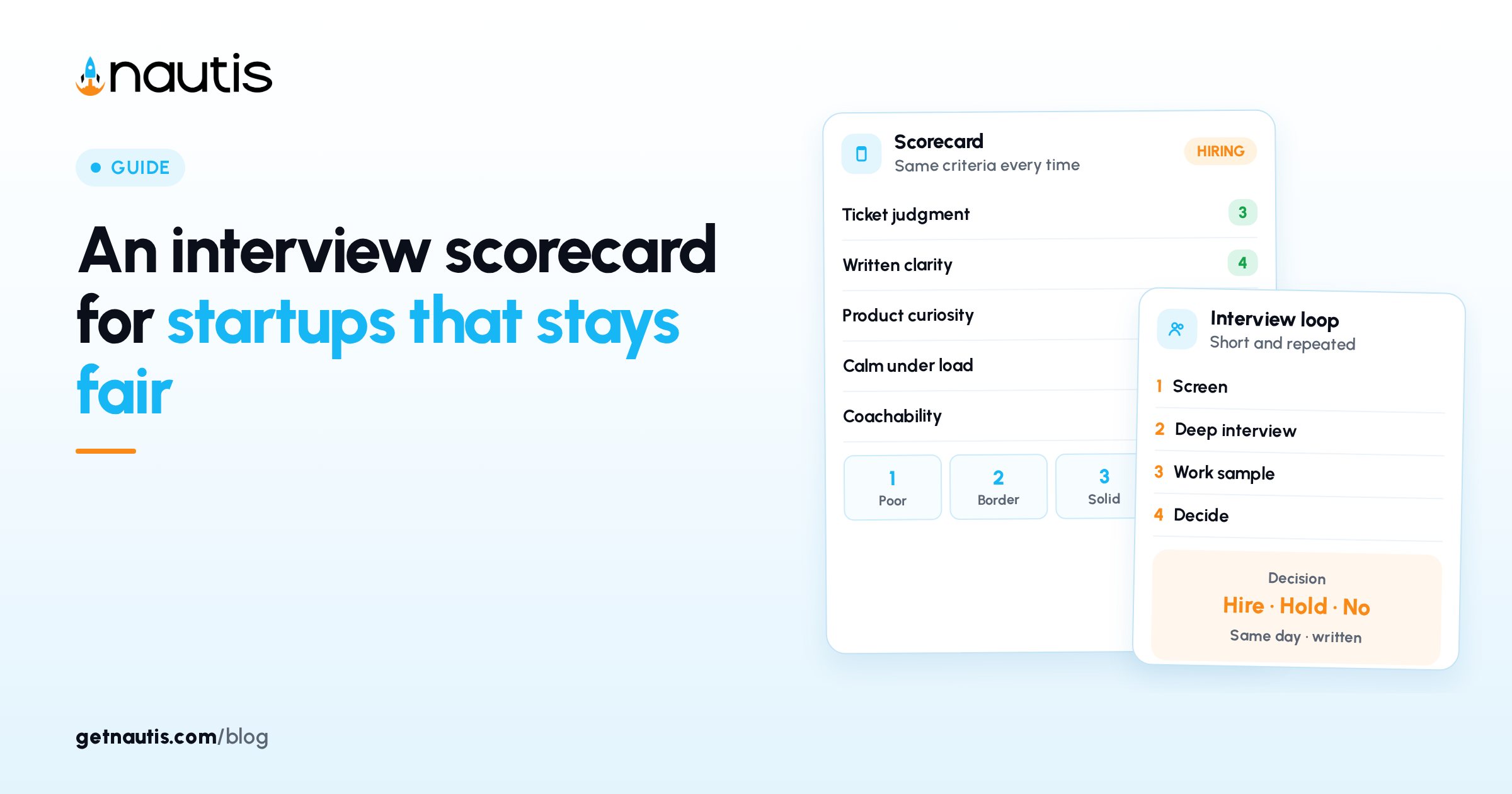
Illustrative scorecard rows (composite only): ships weekly product cuts without heroics; debugs production issues with calm notes; communicates blockers the same day. Nice-to-have: prior startup logo.
Do not open Jobs & Recruitment to publish until the scorecard exists. The Generate button can draft a Job Description from title, type, and skills, but it cannot invent your ninety-day outcomes. Paste outcomes into the description so applicants see the real job.
YC's "Startup HR: What's Important?" framing is a useful reminder that people systems matter early, even when the team is small. A scorecard and consistent stages are the light version of that discipline.
Map every candidate through the same stages
Nautis Jobs & Recruitment uses a kanban pipeline with six stages: Applied, Screening, Interview, Offer, Hired, and Rejected. Drag cards between columns or use Update status. Match your verbal process to those columns so the board is the source of truth.
Stage | Purpose | Pass gate (illustrative) | Owner |
|---|---|---|---|
Applied | New inbound | Resume matches must-haves on scorecard | Recruiter or founder |
Screening | Short list | Scorecard screen notes complete | Hiring manager |
Interview | Live evaluation | Each interviewer filed Feedback | Panel |
Offer | Commercial close | Comp and start date approved | Founder |
Hired | Accepted | Convert to employee completed | HR owner |
Rejected | Closed out | Reason noted for pattern review | Hiring manager |
Illustrative rule (composite only): nobody moves to Interview until Screening notes cite the scorecard by name. Nobody moves to Offer until all Feedback forms are in.
Reject promptly when the gate fails. Leaving weak Applied cards in Screening for weeks blocks attention and signals disrespect. Drag to Rejected with a short reason so monthly reviews can see patterns.
Schedule rounds from the Interviews tab with date, time, panel, and round. Afterward, panellists record Feedback on the candidate card. Empty feedback is a broken step, not a vibe.
Limit panel size. Four interviewers who never write Feedback are worse than two who do. Illustrative default (composite only): hiring manager plus one peer for individual contributor roles; add a cross-functional partner only when the scorecard demands it.
Run a short debrief with a forced decision
Same day or next morning, the owner runs a fifteen-minute debrief. Each interviewer speaks to scorecard rows only. End with hire, hold for another round, or reject. "Maybe later" without a dated next step is a reject.
Illustrative debrief prompt (composite only): "On shipping weekly cuts: strong / mixed / weak. Evidence from the session in one sentence."
EEOC materials on prohibited practices underline that employment decisions should not rest on protected characteristics. Keep notes about skills and outcomes. Train interviewers to stick to the scorecard.
Record the debrief decision in the candidate Notes so someone absent from the call can still see why the company moved. If the decision is hold for another round, name the exact skill to retest and the date by which that round must occur.
Send offers the same way every time
When you drag a candidate to Offer, Nautis can prompt a Send Offer dialog. Use one packet checklist:
Packet item | Why it matters |
|---|---|
Role title and manager | Stops day-one confusion |
Comp and equity summary | Matches what you approved |
Start date and location or remote terms | Sets logistics |
At-will or contract terms your counsel approved | Legal baseline |
Scorecard link for manager | Onboarding stays honest |
Illustrative path (composite only): Offer stage Tuesday, packet sent Wednesday, decision Friday, Hired column updated the same hour they accept.
If equity is part of the package, point counsel and the candidate to the grant documents rather than paraphrasing vesting in Slack. Process consistency includes who is allowed to describe equity.
After Hired, use Convert to employee so the person lands in Employee Management with details pre-filled. In Employee Management, finish required fields (name, official email, phone, employee ID, department, designation, joining date) and set employment type. Do not leave a hired candidate stuck only on the recruitment board.
Set compensation as a dated revision on the employee profile when you are ready. Keep offer numbers aligned with what you sent in the packet so payroll does not invent a third figure.
Publish roles without reinventing the intake
Create New job with Basic Information (Job Title, Job Description, positions, experience), Job Details (Job Type, Workplace Type, Industry, optional Application Deadline), Required Skills, and Compensation (min/max salary, currency, or Hide salary package). Publish for the careers page or Save as draft while the scorecard is still moving. Copy Link shares nautis.app/careers/your-organization-slug style public pages for your org.
Illustrative intake (composite only): draft saved Monday, scorecard locked Tuesday, Publish Wednesday, Copy Link dropped in the team channel.
Hide salary package only when you have a reason and a plan to discuss ranges in Interview. Publishing vague roles while interviewing with a narrow band wastes everyone's time.
Archive filled or paused roles so the careers page stays accurate. Candidates already in the pipeline remain until you Reject or advance them.
Review the funnel monthly so the process improves
Open job analytics for views, applications, and conversion by stage. Look for stages where everyone stalls.
Illustrative read (composite only): Screening to Interview conversion at 10 percent means the screen is unclear or the scorecard is fantasy. Interview to Offer at 80 percent with poor ninety-day outcomes means interviews are too soft.
Compare time-in-stage across roles. A product role stuck in Interview for five weeks while an ops role clears in ten days may mean panel load, not candidate quality. Fix the calendar before you rewrite the scorecard.
A durable startup hiring process includes a monthly thirty-minute review: stage conversions, rejected-reason themes, time-to-offer, and whether Feedback was filed before every Offer move. Write one change to the one-pager. Do not add a new stage unless the table above is failing.
Keep AI ops and headcount questions separate. Whether a task should be hired or automated belongs in capacity planning; once you open a req, run these hiring steps the same way each time.
A startup hiring process earns its keep when a new hiring manager can run a req without a private tutorial from the CEO. If they still need that tutorial, the one-pager is not done.
When you open concurrent reqs, give each one a distinct owner even if the CEO remains final approver on Offer. Two open roles with the same owner who also runs product will stall both pipelines. A startup hiring process includes saying no to a req when no owner has calendar space for Interview rounds this month.
Close the loop after day thirty of employment: did the scorecard outcomes show up? If not, change the Interview exercises before you blame the hire alone. The process owns the prediction quality as much as the candidate does. Put that thirty-day check on the calendar when you drag someone to Hired, not when someone remembers weeks later in a panic about performance reviews.
Add a candidate communication rule to the one-pager: who emails rejects, how fast Screening decisions go out, and what Interviewers may say about timeline. Illustrative rule (composite only): Screening rejects within three business days; Interview rejects within two days of debrief; Offer follow-ups owned by the founder who signed the packet. Slow silence creates glassdoor lore you cannot edit later.
Tie Jobs analytics to that rule. If Applied piles up while Screening notes stay empty, the owner is the bottleneck, not the careers page copy. Fix calendar load before you rewrite the Job Description again.
Frequently asked questions
How is this different from hiring the first employee?
First-hire posts cover proving the seat, classification, and payroll basics. This post covers the repeatable startup hiring process for later hires. Use both.
Do I need every Nautis pipeline stage?
Use the six built-in stages and map your verbal process onto them. Do not invent shadow stages in spreadsheets that the board never sees.
When should I publish a job?
After the scorecard is locked. Save as draft while outcomes are still changing, then Publish and share the careers link.
What goes in interview notes?
Evidence against scorecard rows. Avoid notes tied to protected characteristics. EEOC guidance covers prohibited employment practices.
Sources
- Nautis Jobs & Recruitment help. Checked on October 31, 2026.
- Nautis Employee Management help. Checked on October 31, 2026.
- YC: How to hire your first engineer. Checked on October 31, 2026.
- YC: Startup HR: What's Important?. Checked on October 31, 2026.
- EEOC: Prohibited employment policies/practices. Checked on October 31, 2026.
Baltej Singh is a serial entrepreneur, technology leader, and Founder & CEO of Nautis and DemoVexa, with over 16 years of experience building software products, SaaS platforms, and startups. Previously the Co-Founder & CTO of SanchiConnect, he has worked extensively in the DeepTech startup ecosystem, connecting with 200+ venture capital firms and supporting a network of 4,000+ startups. Passionate about AI, automation, and entrepreneurship, he focuses on building innovative products that solve real-world problems and help businesses grow.