How to run a waitlist launch for a new product
 Baltej Singh8 min read
How to run a waitlist launch for a new product means you collect interest before general access, learn who cares, and open in waves instead of dumping everyone into a half-ready experience. A waitlist launch is a demand and insight tool. A vanity counter is not.
Y Combinator's (YC) essential startup advice keeps pushing clarity over ceremony for its own sake (Y Combinator Library, checked 1 Nov 2026). Make the waitlist small in surface area: a clear promise, one capture path, and one nurture track.
What a waitlist launch for a new product is for
A waitlist launch for a new product has three jobs: prove someone wants the outcome, segment who should enter first, and create a calm path from signup to first use. Tran.vc frames waitlists as proof of early demand when intent is measurable, not when the counter alone looks impressive (Tran.vc on waitlists as demand proof, checked 1 Nov 2026).
It is not a substitute for talking to buyers. It is not a forever parking lot. It is not a fake "10,000 people waiting" badge with no path to access.
Illustrative pattern (composite only): a founder publishes a single-page promise, asks two qualifying questions, sends a same-day thank-you note, invites a high intent cohort first, and tells the rest which wave they are in.
If you already think in horizons, keep the waitlist inside a short go-to-market window such as a 30-60-90 go-to-market plan. The waitlist feeds insight; it does not replace the plan.
Write a single promise before you collect a single email
State who it is for, what outcome they get, and what pain they avoid. One sentence. If you need a paragraph, you are not ready to capture attention.
Show a sketch, short clip, or still of the product surface. People join faster when they can picture the thing.
Name what "joined" gets them: early access waves, a founding price period, or a private feedback channel. Vague "stay tuned" pages leak trust.
Refuse five competing calls to action. The page exists to join the waitlist launch, not to browse the whole brand story.
Test the page on a phone. Many signups happen on small screens, and a broken form field kills the launch before ads or posts ever matter.
Ask a trusted person in the target role to join as a dry run. If they cannot explain the promise back to you in one spoken line, rewrite before you spend attention.
Capture intent, not only an address
The waitlist join should tell you who deserves the first wave. Ask for work email plus a tiny qualifier set aimed at invite order. Two or three prompts beat a long survey. Useful prompts: role, current workaround, and urgency ("need this now" versus "curious").
Tran.vc suggests an optional deeper step for people who want to move faster, such as a short workflow note or a short call link, then treating completers as higher intent (Tran.vc, checked 1 Nov 2026). Leave that step optional so the main path stays light.
Qualifier | Why it earns its place on a waitlist | Trap to avoid |
|---|---|---|
Work email | Lets you nurture and send wave invites | Demanding personal email only |
Role | Orders cohorts and message tone | Ten vague role options |
Current tool or workaround | Shows what you must displace | Open essay box on step one |
Urgency | Decides wave order honestly | Fake scarcity copy |
Optional "tell us more" | Marks high intent for early access | Making the essay required |
Store answers with the contact so wave selection is not a guessing game.
In Nautis, you can host the public capture page with Custom Forms and keep contacts moving in Leads CRM (Custom Forms help). Nautis is not a dedicated waitlist product; pair the capture page with your email tool for nurture and invites.
Prefer the stack you already run day to day rather than adding five new apps for one launch. The same lean instinct shows up when you manage a startup without using 15 different tools.
Tag every join with source (post, referral, partner, ad). Without source tags, you cannot tell which channel brought high intent people versus idle curiosity.
Confirm immediately, then nurture and stay visible
Send a confirmation the same day: what they joined, what happens next, and when they should expect the next note. Silence turns a waitlist into a black hole.
Plan a short sequence before you open public signup: welcome, why you are building it, a useful teaser or lesson, and the access invite. GetWaitlist's 2025 strategy notes treat each join as a hypothesis to learn from, not only a lead to count (GetWaitlist: waitlist marketing strategy 2025, checked 1 Nov 2026).
Make updates concrete: a screenshot, a removed risk, a dated wave. Skip hype adjectives.
Cap how often you write. A short note about every fortnight beats daily noise that trains people to ignore you. When you have nothing real to show, do not invent a newsletter.
If the build slips, say so with a new date range. People forgive delay. They do not forgive disappearing.
Founders who already skim a daily founder briefing can park waitlist follow-ups beside other ops asks so thank-you replies and wave invites do not live only in a personal inbox.
Open in waves with published rules
Publish how you choose who enters: role fit, urgency, referral quality, or completeness of the qualifier answers. Honest rules reduce angry replies.
Invite a small high intent cohort first. Stabilize onboarding. Then open the next wave. Burst access with clear entry periods usually beats a drip that never finishes.
Reward engaged signups without false about queue math. If referrals move someone up, say by how much and keep the ledger consistent.
On the thank-you page, offer a clean pass-along path and a reason to return. Peak interest is right after signup; a dead "success" screen wastes it. FlowyForm's waitlist guidance stresses using that moment for pass-alongs and segmentation rather than a blank confirmation (FlowyForm on SaaS beta waitlists, checked 1 Nov 2026).
Prepare the invite email before the first wave: access link, what to try first, how to send feedback, and when the next wave opens. Scrambling the invite the night before access is how onboarding feels careless.
Measure demand quality, not only signup count
Track page conversion to join, share of high intent completers, reply rate to nurture notes, show rate to invites, and activation after access. A fat list with silent invites is a warning, not a win.
Compare standard signups with people who took the optional deeper step. The gap is an early demand curve.
Export a simple cohort table after each wave: invited, activated within three days, still active after two weeks, and feedback quality. Review that table before you spend more on awareness. Volume without activation is expensive noise.
Test willingness to pay only with a clear, fair offer such as a refundable reservation or a dated founding price for a named pilot scope. Do not invent pressure tactics that you cannot honor.
When activation is weak, fix onboarding before you spend more on traffic. More waitlist volume will not heal a confusing first session.
Close the waitlist when it stops teaching
End public signup when the next waves are full for the season you can support, or when the product is generally available. A permanent waitlist with no movement becomes a trust tax.
Migrate useful contacts into your normal CRM path. Tag which wave they came from so later messaging stays accurate.
Write a short retrospective: which promise converted, which qualifier predicted activation, which nurture note earned replies. Carry those lessons into the next launch.
Archive the landing page version, form fields, and email copy with dates. Future you will want the artifacts, not a vague memory that "the waitlist worked."
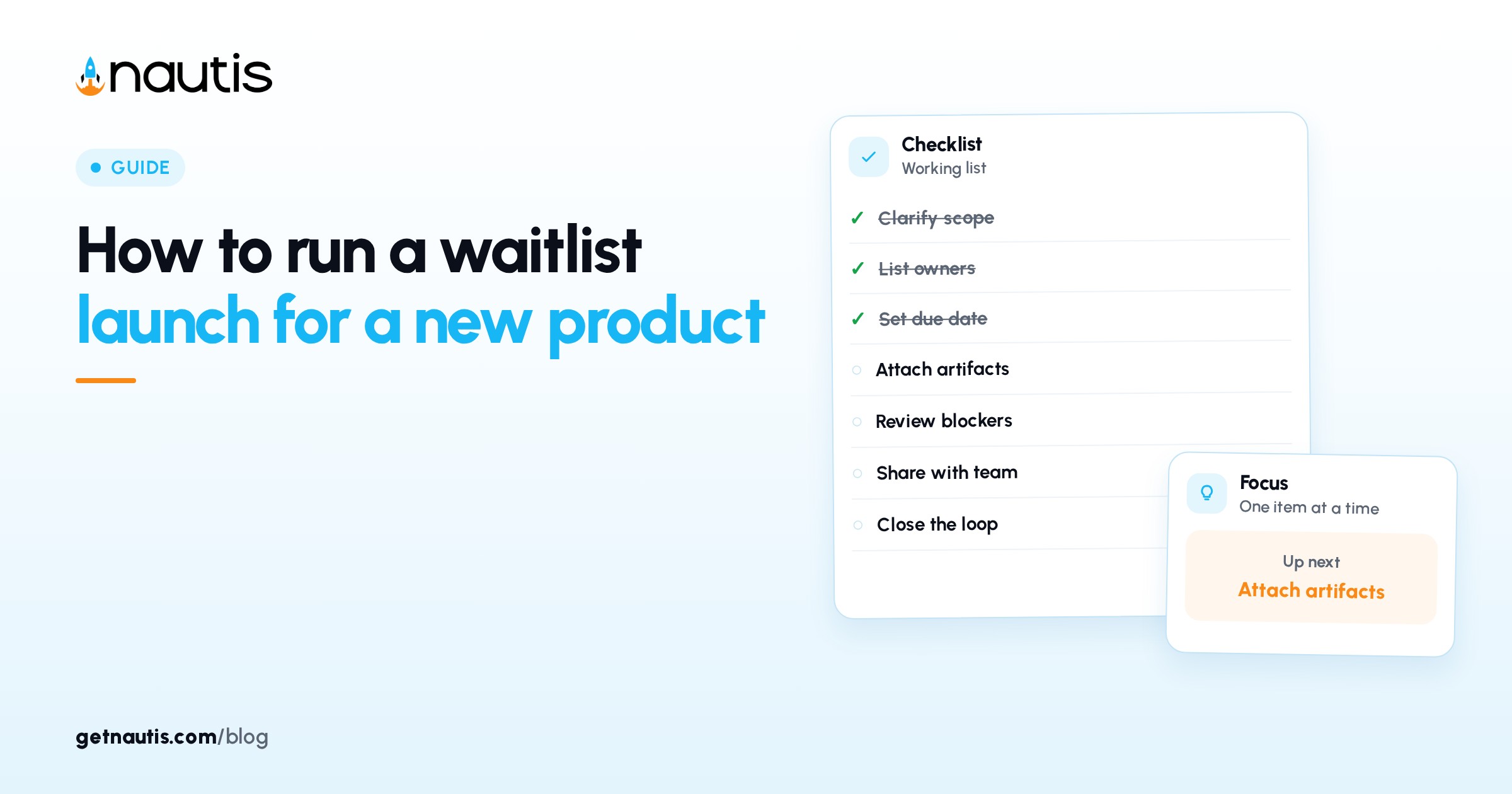
Build a tiny ops checklist for each wave: who sends the invite, who watches activation, who answers the first confusion thread, and when the wave closes to new entries. Missing holders create orphaned signups who received access and then silence.
For B2B lists, route high intent completers to a human reply within one business day. Automation can confirm the join; a person should still greet the strongest-fit accounts.
Common failure modes to refuse: buying ads into a page with no nurture, promising "this week" access you cannot deliver, and inviting the entire list on day one because you fear looking slow. Each failure trades short-term ego for long-term distrust.
If sales calls start from the waitlist, give the invitees the same qualifier context the form collected. Cold intros that ignore the answers people already typed waste the signal you paid to gather.
Make legal and privacy basics boring and real: say what you will email about, and make unsubscribe obvious. This post is not legal advice; follow the rules that apply where you operate.
How to run a waitlist launch for a new product works when the page is clear, intent is captured, communication is honest, and access arrives in waves you can support. Collect less theater. Invite more carefully. Gather proof before you scale the top of the funnel.
A patient queue with clean waves beats a crowded list that never reaches a first useful working session.
Frequently asked questions
How do you run a waitlist launch for a new product?
Publish a single promise, capture email with light qualifiers, confirm immediately, nurture with real updates, then invite high-intent people in waves with clear rules.
What should a waitlist form ask?
Ask for work email, role, current workaround, and urgency. Add an optional deeper step for people who want to move faster so you can spot high intent.
When should we invite the full list?
Rarely on day one. Stabilize onboarding with a small high-intent cohort first, then open the next wave. Burst access with honest dates beats a queue that never moves.
Does Nautis include a waitlist product?
No dedicated waitlist module. Use Custom Forms to collect joins and Leads CRM to manage people, plus your email tool for nurture and invites.
Sources
- Tran.vc, Using waitlists as proof of early demand. Checked on November 1, 2026.
- GetWaitlist, Waitlist marketing strategy 2025. Checked on November 1, 2026.
- Y Combinator Library, Essential startup advice. Checked on November 1, 2026.
Baltej Singh is a serial entrepreneur, technology leader, and Founder & CEO of Nautis and DemoVexa, with over 16 years of experience building software products, SaaS platforms, and startups. Previously the Co-Founder & CTO of SanchiConnect, he has worked extensively in the DeepTech startup ecosystem, connecting with 200+ venture capital firms and supporting a network of 4,000+ startups. Passionate about AI, automation, and entrepreneurship, he focuses on building innovative products that solve real-world problems and help businesses grow.